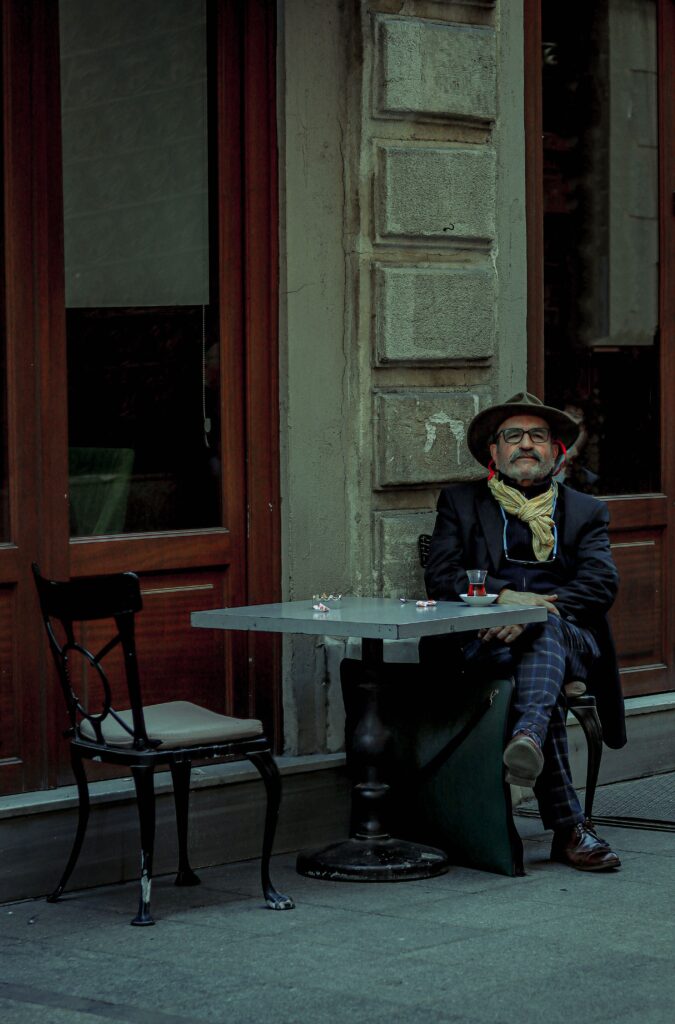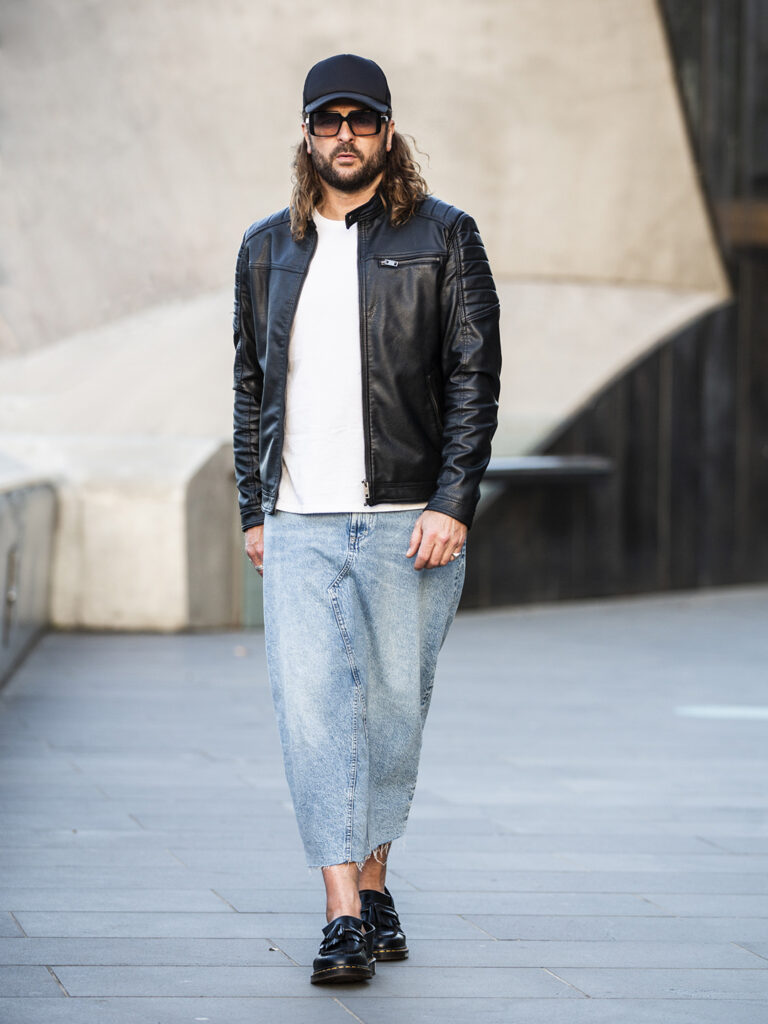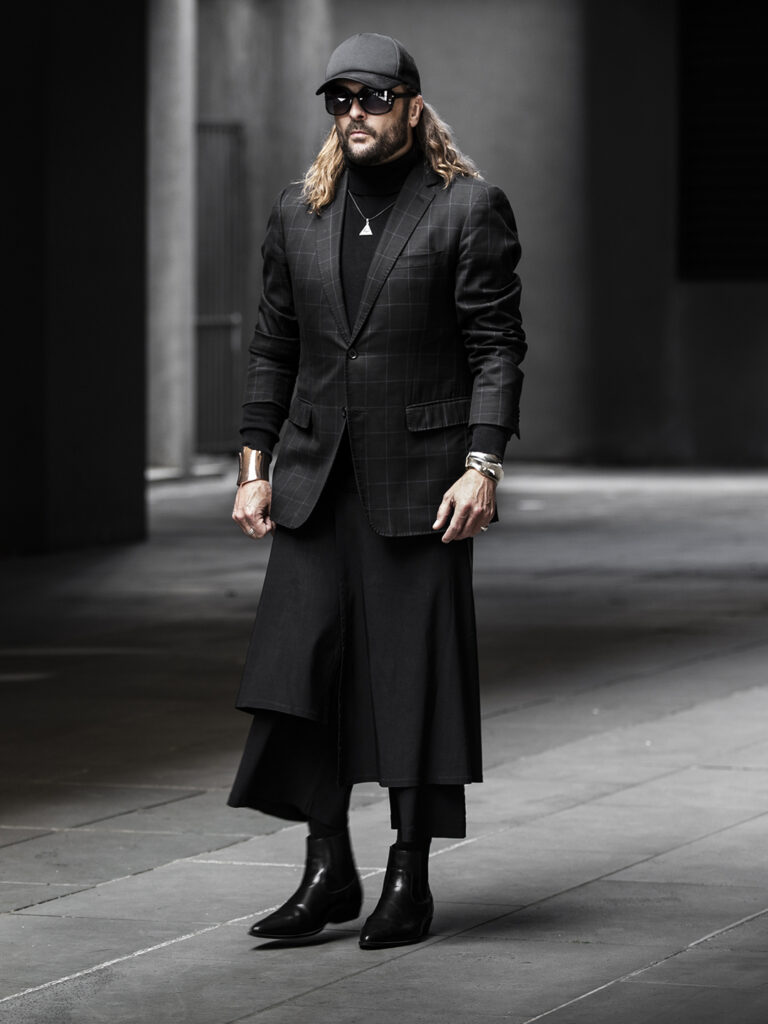
I hear the sentence often: “You look great in that, Brad, but I could never wear it.” It sounds final. Most of the time, it is only the beginning of a more honest conversation.
Sometimes “I could never” means the garment genuinely is not your style. That is perfectly reasonable. Authenticity is not measured by how unconventional you can become. But sometimes it means something else: I am curious, I can imagine it, and I am frightened by what the curiosity might require of me.
Separate taste from fear
Try this question: if nobody could see you, would you still want to wear it? If the answer is no, leave it. If the answer is yes, the barrier may not be taste at all.
We often mistake unfamiliarity for unsuitability. The first time you see yourself in a new silhouette, your brain compares it with years of repetition. “Wrong” may simply mean “new”. Give your eye time to catch up.
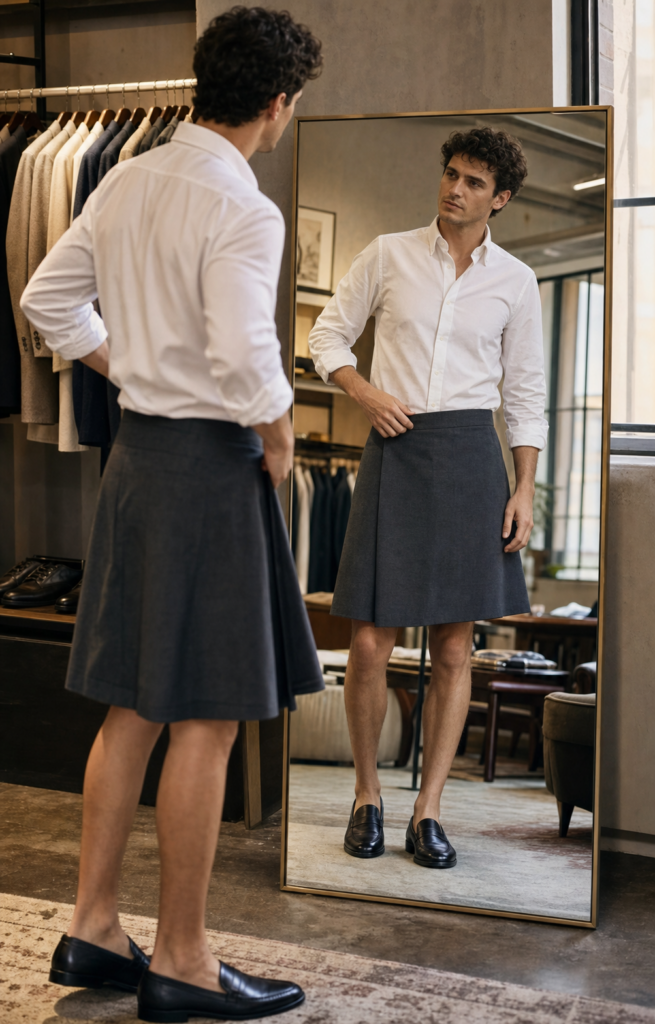
Do not begin with the loudest version
If you are curious about skirts, you do not need to begin with a runway look. Start with proportion and familiar language. A dark A-line or wrap skirt can sit naturally beside a white shirt, a leather jacket, knitwear, boots or loafers. Keep most of the outfit recognisably yours and change one element.
Think of it as learning a new word rather than changing your entire language. The goal is not disguise. It is expansion.
Personal style grows when curiosity is given more authority than the imaginary audience.
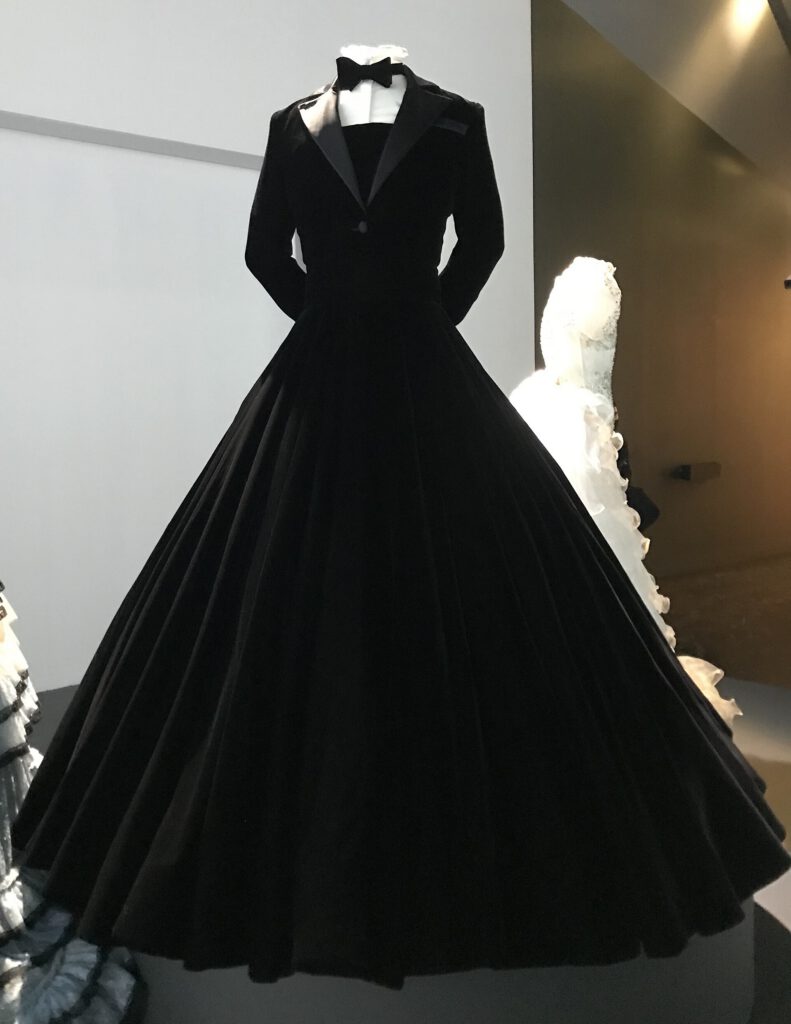
Billy Porter’s tuxedo gown is dramatic because drama was the purpose. The Christian Siriano design combines the authority of black-tie tailoring with the movement of a ball gown. You do not need to reproduce it to learn from it. The useful idea is contrast: familiar structure can make an unfamiliar silhouette feel intentional.
Build evidence in small steps
Wear the outfit at home until you stop studying every angle. Photograph it. Adjust the length, footwear and layers. Then choose a setting where you feel supported. Confidence is not an entrance exam you pass before leaving the house; it is the result of leaving the house often enough to discover that you can cope.
And if you try it and decide it is not you, that is valuable information. You have made a choice from experience instead of fear.
The next time you hear yourself say “I could never wear that,” add one word: “yet.” Not as pressure. As possibility. Your wardrobe should not become another set of expectations. It should be a place where you are allowed to find out.